5 Hidden Scenic Spots in Korea Foreigners Love: Jusanji in Cheongsong, Maisan in Jinan, Darangi Village in Namhae, Boseong Green Tea Fields and Daewangam Park in Ulsan
When people think of travel in Korea, Seoul, Busan and Jeju often come to mind first. But widen the map a little and you will find scenery hidden across the regions that is hard to believe is in Korea.
Last time we introduced five hidden scenic spots in Chungcheong, Gangwon and Gyeonggi. This time we head south and pick five places in Gyeongsang, Jeolla and Ulsan that foreign travelers can easily visit. To read the previous part, see Korea’s Hidden Scenic Spots BEST 5 that will win over foreign visitorsas well.
1. Why visit Jusanji in Cheongsong at dawn?

The first place is Jusanji in Cheongsong, Gyeongsangbuk-do. It is a small reservoir inside Juwangsan National Park, said to have been made when work began on a dam across the valley around 1720, under King Sukjong of the Joseon Dynasty. For nearly 300 years it has supplied water to the village’s rice paddies.
What makes Jusanji special are the willows rooted in the water. Old willows around 300 years old, believed to have been there since the reservoir was built, still reach their trunks above the surface. Trees growing while partly underwater are a rare sight, and the site has been designated a Scenic Site.
The most beautiful time is early morning. On cool autumn dawns, mist rises from the water, and the willows and autumn leaves are reflected like a mirror. That is why photographers set up their tripods before sunrise.
From the parking lot, a flat walking path leads to the reservoir. A deck by the water lets you see the willows up close. If you have time, also explore the valley trails of Juwangsan in the same national park.
2. Why is Maisan in Jinan called ‘horse ears’?
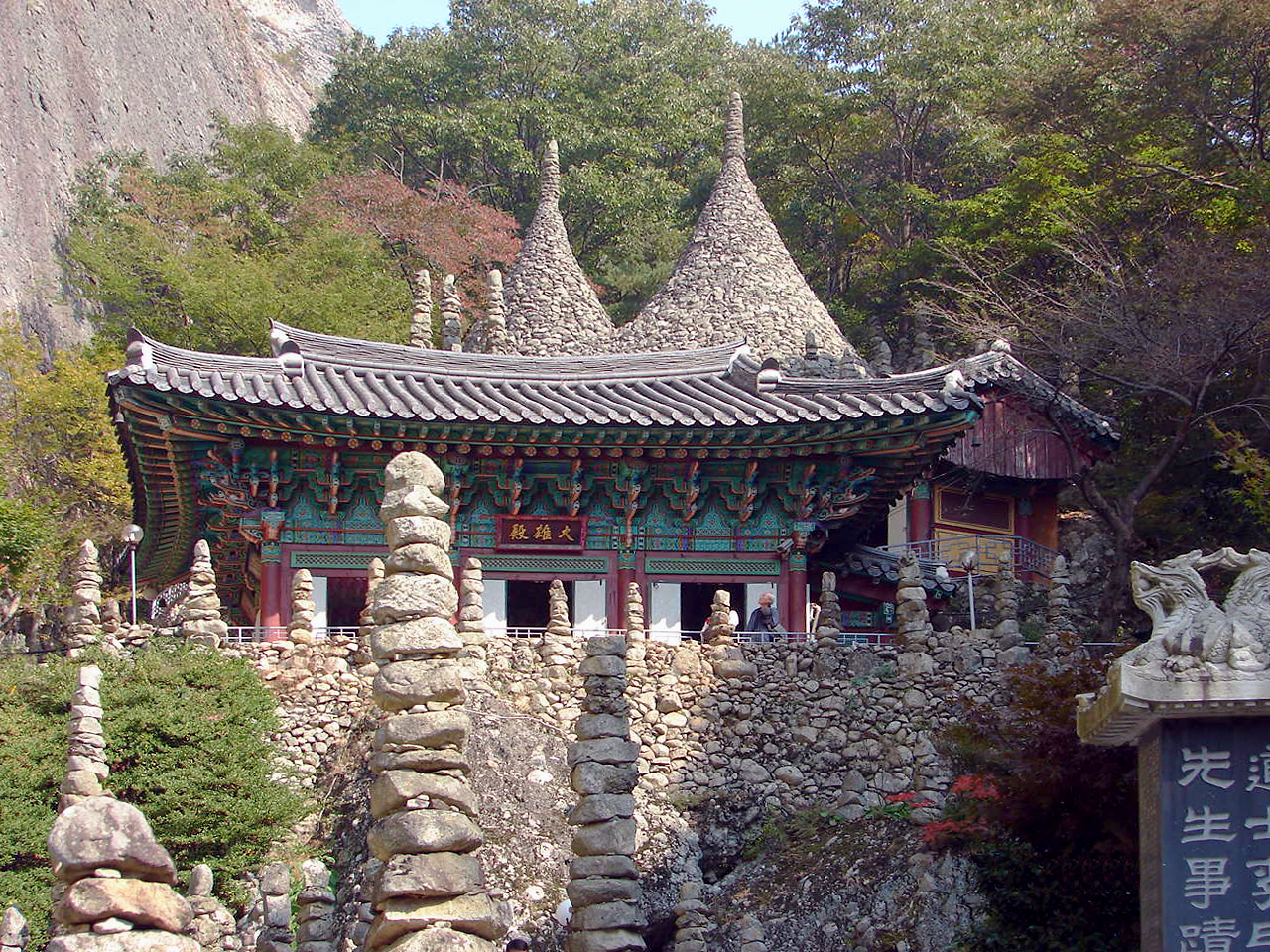
The second is Maisan in Jinan, Jeollabuk-do. As the name says, it is a ‘mountain shaped like horse ears’. From afar, two rock peaks rise side by side like ears: the eastern one is called Sutmaibong and the western one Ammaibong. These smooth, almost treeless rock peaks look nothing like the mountains around them.
The must-see at Maisan is Tapsa Temple below Ammaibong Peak. About 80 stone towers, large and small, stand here. Yi Gap-ryong, born in 1860, is said to have come to Maisan at 25 and stacked the stones one by one as a spiritual practice until he died at 98.
It is remarkable that the stones, stacked without cement or glue, have stood through years of wind and rain. The largest, Cheonjitap, is 13.5 m tall. Cone-shaped stone towers lined up against the rock cliffs are a sight rarely seen elsewhere, so foreign travelers tend to linger here.
From the south parking lot, a path runs along Tapyeongje Reservoir to Tapsa Temple. Cherry blossoms in spring and autumn leaves in fall make the walk a pleasure.
3. Why are the rice paddies at Darangi Village in Namhae shaped like stairs?

The third is Gacheon Darangi Village in Namhae, Gyeongsangnam-do. ‘Darangi’ means small, narrow paddies cut into a hillside like steps. With almost no flat land on the steep slope dropping straight into the sea, villagers stacked stones to widen their paddies inch by inch as they farmed.
Hundreds of paddies made this way step down toward the sea, making the whole village look like one giant staircase. This landscape made by people and nature together was designated a Scenic Site in 2005.
In spring each paddy turns yellow with canola flowers, in early summer the flooded paddies mirror the sky, and in autumn the rice turns golden, so every season looks completely different.
Inside the village are the Amsu Rocks, where people once prayed for abundance, and they are worth a look. The Namhae Barae-gil coastal walking trail also passes through the village, so a short walk along the coast in the sea breeze is recommended. The village sits on a slope with many climbs and stairs, so wear comfortable shoes.
4. Why do the Boseong green tea fields look like green waves?

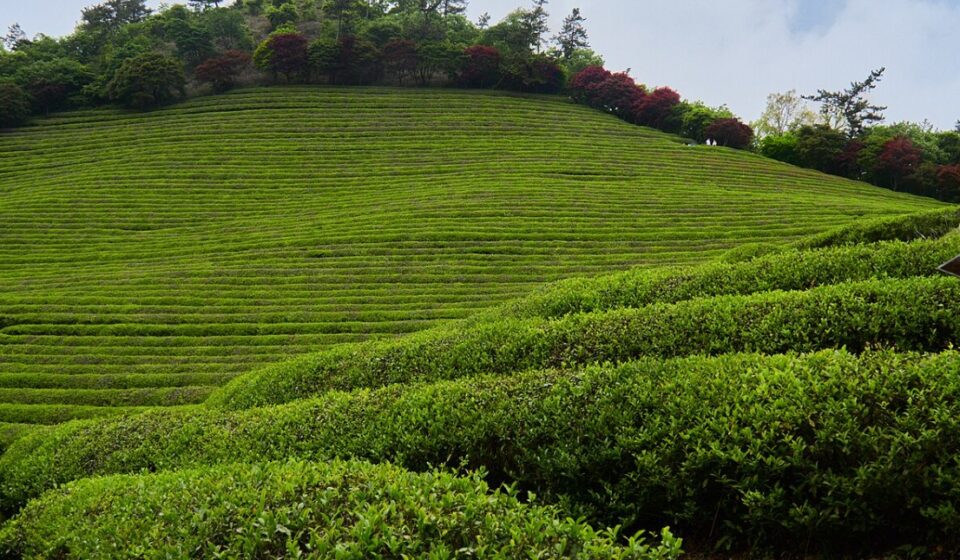
The fourth is the green tea fields of Boseong, Jeollanam-do. Boseong is Korea’s best-known green tea region, and Daehan Dawon is its most visited tea plantation. First planted for tea in 1939, it was taken over by Daehan Daeop in 1957 and has been tended into what it is today.
Rows of tea bushes trimmed into rounded shapes line the hillside and, from a distance, look like layers of green waves. Follow the path between the rows up to the observation deck and you can see the whole tea field at a glance.
Tall cedar trees planted in the mid-1950s form a forest tunnel along the entrance road. After walking the tea fields, the café inside is a nice place to rest with a green tea latte or green tea ice cream.
5. What legend lies behind Daewangam Park in Ulsan?
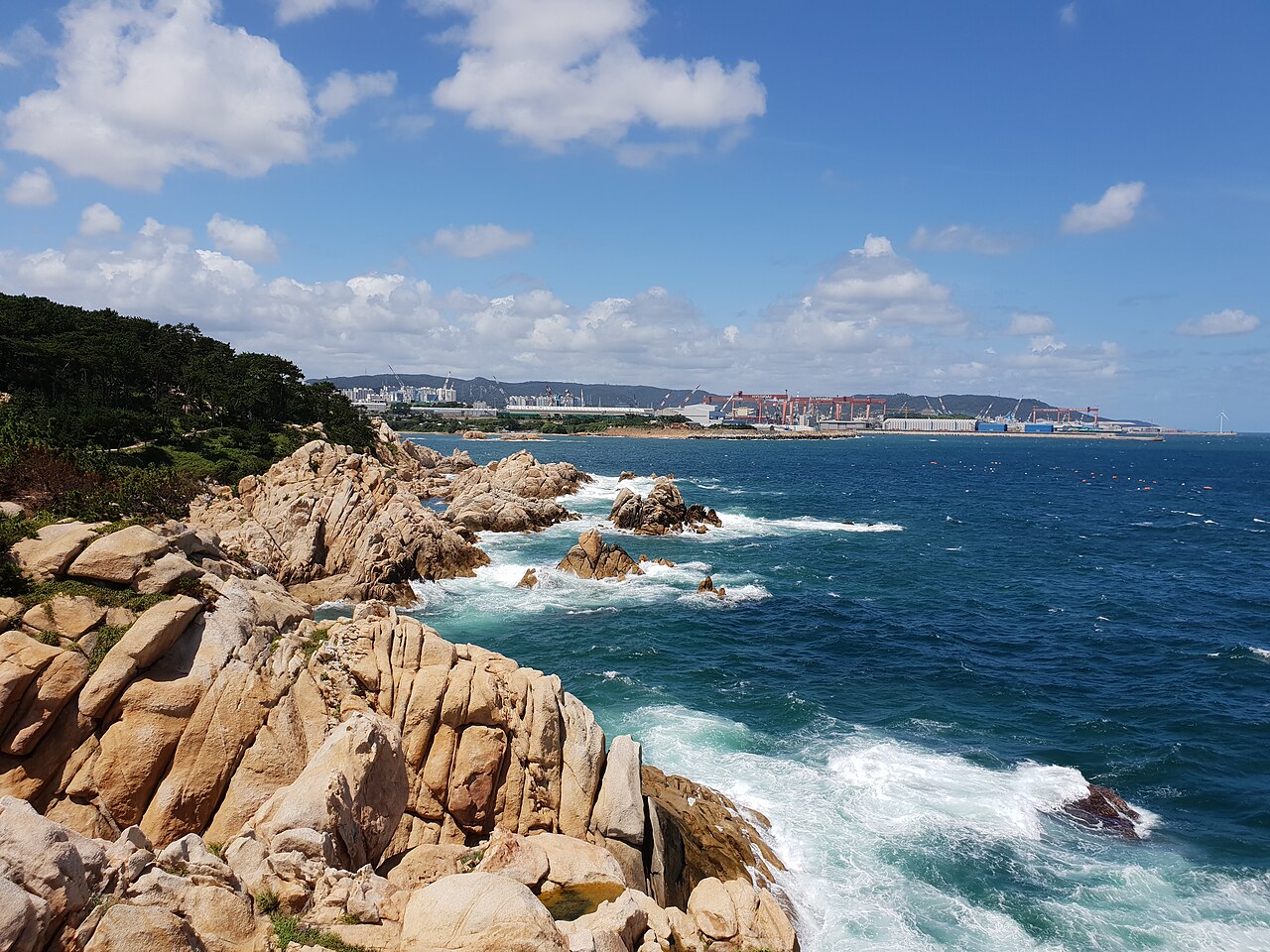
Last is Daewangam Park in Dong-gu, Ulsan. Here, reddish rocks stand at a point jutting out into the sea, taking the rough waves of the East Sea.
Legend says that the queen of King Munmu of Silla became a dragon after her death to protect the country and rests beneath this rocky islet, which is why it is called Daewangam. Daewanggyo, an iron bridge, links the land and the islet, so you can walk across to it.
A long pine forest lines the path from the entrance to the sea. As you walk in the shade of the pines, the view suddenly opens onto the blue sea, and that moment is the highlight of Daewangam Park.
The sea suspension bridge along the coast is also popular. At 303 m long, it feels like walking over the sea. Entry to the park is free, and so is crossing the bridge.
How do the five places compare?
| Place | Region | Best for |
|---|---|---|
| Jusanji | Cheongsong, Gyeongbuk | Those who want photos of morning mist and autumn leaves |
| Maisan Tapsa Temple | Jinan, Jeonbuk | Those who want to see unusual rock peaks and stone towers |
| Darangi Village | Namhae, Gyeongnam | Those who love the sea and rural village scenery |
| Boseong Green Tea Fields | Boseong, Jeonnam | Those who want to rest in green scenery |
| Daewangam Park | Dong-gu, Ulsan | Those who want to walk along the sea and rocky coast |
All five places are quite far for a day trip from Seoul. Adding one or two to a trip through the southern regions lets you enjoy them at a more relaxed pace. Hours and fees may change by season, so check each region’s tourist information again before you set off.
If you have foreign friends or family visiting Korea, be sure to show them scenery like this, hidden somewhere between Seoul and Busan.
👉Korean ER Costs: How Much Do Foreigners Pay Without Insurance?
Discover more from Hospital & Health Insight Korea
Subscribe to get the latest posts sent to your email.


 Korean
 English
 Japanese
 Chinese (China)
 Chinese (Taiwan)
 French
 Spanish
 Hindi
 Indonesian
 Russian
 Mongolian
 Vietnamese
 Thai
 German
 Turkish
 Portuguese
 Italian
 Polish
 Arabic